Cushing, OK · Payne County
Basement Water Damage Restoration in Cushing, OKBasement Floor Water Removal & Basement Dehumidification
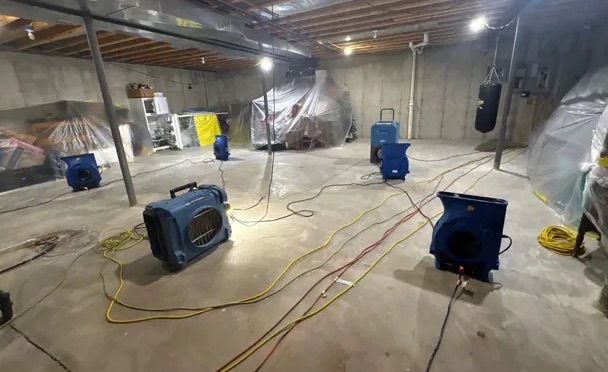
Basement Water Damage Restoration in Cushing runs from basement water extraction and basement floor water removal to basement dehumidification.
Answered 24/7
Professional Basement Water Damage Restoration in Cushing, OK
Basement Water Damage Restoration in Cushing usually involves two parts: the emergency work of removing water and the slower work of drying a below-grade space. Both matter for keeping repairs small.
One burst pipe or heavy storm in Cushing can flood a basement. Local restoration pros serve Cushing and nearby Agra, Tryon and Perkins, with help available around the clock.
Complete Basement Water Damage Restoration for Cushing
Basement Floor Water Removal
Wet carpet pad is removed from basement floors, since it holds water against the concrete and dries poorly.
Basement Dehumidification
Large dehumidifiers pull moisture from the basement air so walls, framing and the slab can release their water.
Basement Sewer Backup Cleanup
Porous materials touched by sewage, such as carpet, pad and lower drywall, are removed. Concrete and framing are cleaned and disinfected.
Basement Mold Prevention
After drying, an antimicrobial can be applied to framing and concrete that were wet, to slow mold on surfaces that stay in place.
Basement Wall Drying
Finished basement walls hide wet insulation and framing. Removing the bottom of the drywall lets air reach the cavity.
Indicators for Basement Water Damage Restoration in Cushing
Sump Pump Failure or Overflow
A sump pump that runs constantly, fails to start or lets the pit overflow puts the basement at risk.
Mold on Surfaces
Dark spots on drywall, framing or stored boxes mean the area has stayed wet for days.
Sewage Odors or Backups
Sewage smells or water coming up through a floor drain mean the sewer line is backing up.
Rusted Appliances or Pipes
Rust on the water heater, furnace base or pipes points to repeated moisture or past flooding.
How Basement Water Damage Restoration Works in Cushing
Step 1: Water Removal
Pumps and extractors remove standing water from the basement floor, starting at the lowest point.
Step 2: Targeted Moisture Evaporation
Air movers are aimed at wet walls, framing and the slab to speed evaporation.
Step 3: Humidity Control
Large dehumidifiers pull moisture from the basement air, with readings checked every day.
Step 4: Final Verification and Restoration
Final readings confirm the basement is dry, and the space is ready for drywall and flooring repairs.
Why Basement Water Damage Occurs in Cushing
Water Heater or Appliance Leaks
Water heaters, washers and utility sinks in the basement can leak or fail without warning.
Sump Pump Mechanical Failure
A sump pump that fails, loses power or is too small lets groundwater rise into the basement.
Window Well Flooding
Window wells without drains or covers fill with rain and leak through basement windows.
High Water Table and Hydrostatic Pressure
A high water table pushes groundwater up through the slab and into the joints between wall and floor.
Basement Water Damage Restoration for All Properties in Cushing
Residential Basement Water Damage Restoration
In homes, a flooded basement often means damaged carpet, drywall, a furnace or water heater and stored belongings. Water is pumped out, contents are moved and the space is dried.
Commercial Basement Water Damage Restoration
In commercial buildings, basements hold mechanical rooms, storage and sometimes offices. Water is removed and equipment areas are dried so systems can be checked and restarted.
Basement Water Damage Restoration vs. DIY: When to Call the Pros
Keeping gutters and downspouts clear and checking water heater and washer hoses are good DIY steps before storm season. Once water is on the floor, call (405) 565-9833.
What Influences Basement Water Damage Restoration Cost in Cushing
Waterproofing or sump pump replacement is a separate cost from water removal and drying. In Cushing, both may be needed to prevent a repeat.
Affected Square Footage
Larger basements need more extraction, more drying equipment and more days of drying time.
Dehumidification Needs
Large dehumidifiers may need to run longer in below-grade spaces than in upper floors.
Material Saturation
Finished basements with carpet, drywall and insulation take more removal work than bare concrete.
Does Insurance Cover Basement Water Damage Restoration?
Coverage for basement water damage restoration depends on where the water came from and your policy terms. The pros document the damage, and your insurer decides what is covered.
Advantages of Hiring Local Pros in Cushing for Basement Water Damage Restoration
Detailed Documentation
Photos, readings and drying logs are kept to support your insurance claim.
Mold Prevention Focus
Fast drying is the main way to limit microbial growth in a below-grade space.
Advanced Moisture Detection
Moisture meters and thermal cameras find water in walls and slabs that looks dry.
Cushing Emergency Basement Water Damage Restoration Response
Every hour of standing water in a basement means more drywall and flooring to replace. Call (405) 565-9833 for basement water damage restoration in Cushing.
Call Now (405) 565-9833Basement Water Damage Restoration Serving Cushing, Agra, Tryon and Perkins
Nearby areas served for basement water damage restoration include Agra, Tryon and Perkins, with the same pumping and drying steps used in Cushing.
- Basement Water Damage Restoration in Agra
- Basement Water Damage Restoration in Tryon
- Basement Water Damage Restoration in Perkins
- Basement Water Damage Restoration in Stroud
- Basement Water Damage Restoration in Carney
- Basement Water Damage Restoration in Stillwater
- Basement Water Damage Restoration in Chandler
- Basement Water Damage Restoration in Bristow
- Emergency Damage Restoration in 74023
- Storm Damage Restoration in 74023
- Water Damage Restoration in 74023
- Water Extraction Service in 74023
- Water Leak Detection in 74023
- Water Removal Service in 74023
Basement Water Damage Restoration Common Questions Answered
What causes the most common below-grade leaks in homes?
Sump pump failures, foundation cracks, clogged drain tile, sewer backups and burst pipes in the basement ceiling.
How is basement sewer backup cleanup different from regular flooding?
Sewage carries bacteria, so it needs protective gear, removal of porous materials and disinfection before drying.
Why is quick action important for below-grade flood restoration?
Basements dry slowly, so every hour of standing water adds days of drying and more material to replace.
Does basement mold prevention need special steps after flooding?
Fast drying is the main step. Wood and concrete that stayed wet can be treated with an antimicrobial once dry.
How long does below-grade drying take after a flood?
Often several days or longer, since concrete and cool basement air dry slowly. Daily readings show progress.